
Title: EV Charger Grounding Issues: Hidden Dangers, Detection, and Proper Solutions
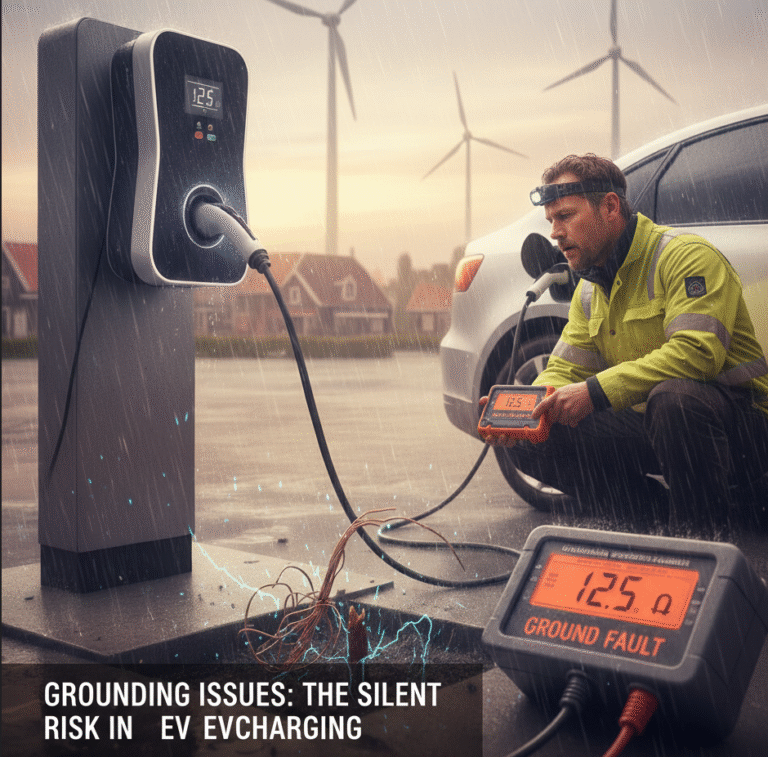
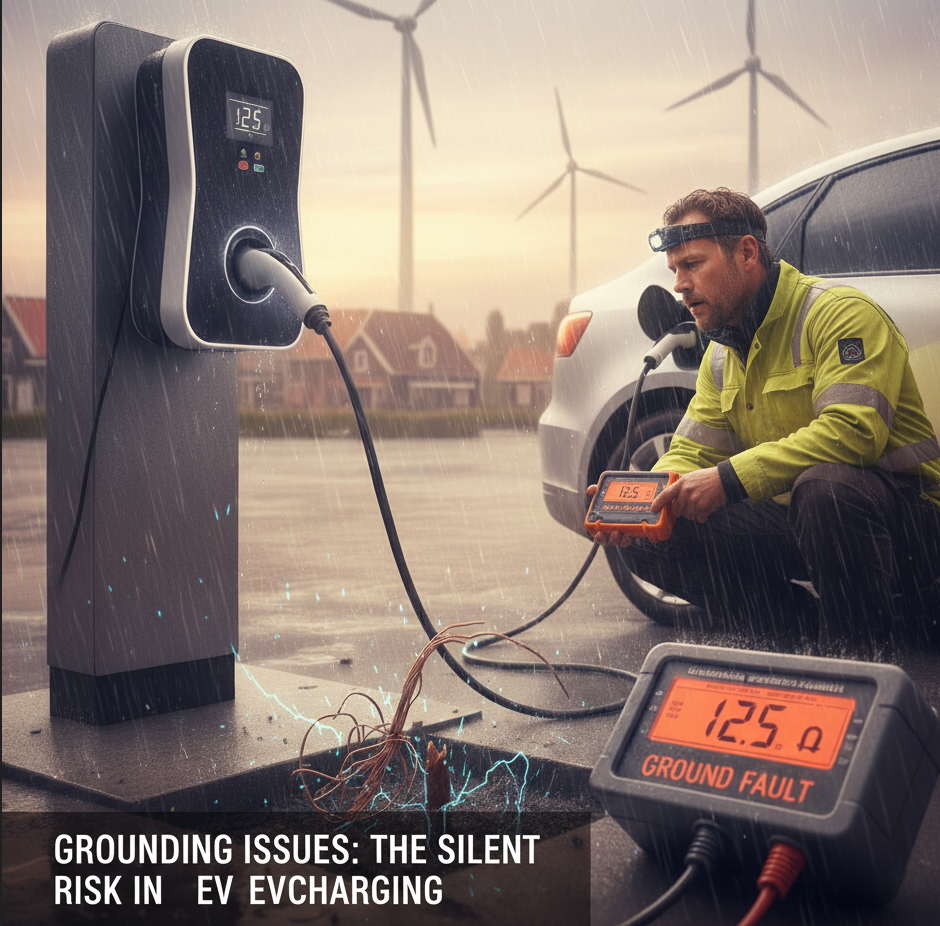
Ever had that uneasy “tingling” feeling touching your EV during rain? Or seen your charger trip unexpectedly? In many installations—especially outdoor in rainy North Holland—poor grounding is the silent culprit behind 30%+ of safety incidents and failures. This isn’t about the charger hardware; it’s a deployment blind spot that turns minor faults into major risks. Drawing from real client reports (installers, fleet operators), here’s a clear breakdown to help you spot and fix it.
What Are EV Charger Grounding Issues?
Grounding (earthing) connects the charger and EV to earth, safely diverting fault currents. Poor grounding means resistance too high (>4-10Ω) or missing connections, allowing leakage to energize metal parts. Common in rushed installs, old wiring, or high-resistivity soils (sandy/dry areas). Client complaint example: “After rain, the station chassis feels live”—classic leakage from ungrounded faults.
How to Detect Grounding Issues?
On-site checks are straightforward but critical:
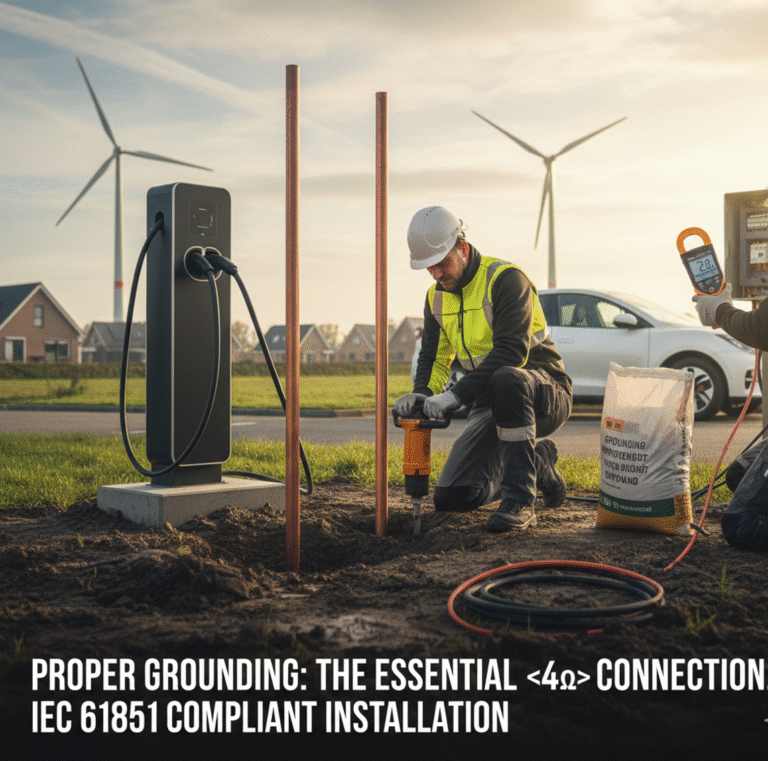
- Measure grounding resistance: Should be <4Ω (IEC 61851 standard); use a tester—if >10Ω, high risk.
- Visual/functional signs: Frequent GFCI trips, “ground fault” errors on display, tingling on touch, or charger refusing to start (many auto-check grounding).
- Environmental clues: Outdoor/rainy setups amplify issues—moisture + poor ground = leakage path.
Table: Grounding Issue Detection Checklist
| Issue Indicator | What to Check | Common Client Feedback |
|---|---|---|
| High Resistance | Tester shows >4-10Ω | “Charger won’t start in wet weather” |
| Leakage Symptoms | Tingling on chassis/vehicle | “Feels electric when touching during charge” |
| Error Codes | Ground fault displayed | “Trips randomly, especially rain” |
| Visual Faults | Loose/coroded ground wire, no rod | “Installation was quick, now problems” |
Follow IEC 61851 (protective earth always connected, not switched) and local EU/NL regs:
- Install proper grounding: Use earth rods (1.5-3m deep), multiple if high resistivity; aim <4Ω.
- Professional verification: Certified installers test post-setup; add chemical compounds for poor soil.
- Protective measures: GFCI/RCD (Type B for DC), regular 6-month tests; avoid bypass adapters (risky—can energize body in faults).
Gold Sentence 1 (Definition Type): EV Charger grounding issues = failure to provide a low-resistance path for fault currents, turning the station into a potential live hazard.
Potential Risks of Poor Grounding
Ignoring this leads to:
- Electric shocks: Leakage to vehicle/chassis (high risk in rain/humid NL; reports of injuries).
- Equipment damage: Surges fry electronics, void warranties.
- Fire/overheating: Fault currents cause arcs (EU data links 30% incidents to grounding faults).
- Operational downtime: Charger blocks charging for safety.
FAQ
- Q: Does every EV Charger need grounding? A: Yes—IEC 61851 mandates it; most won’t charge without verified low-resistance earth.
- Q: Common in Netherlands? A: Yes—rainy climate + variable soils increase leakage risks; always test <4Ω.
Share your site challenges for tailored insights.