
EV Charger Compatibility Issues with Different Cars: Causes & Fixes
Your fleet has mixed EV models—some charge perfectly, others fail to connect, charge slowly, or drop mid-session. From real CPO operators and fleet managers in Europe, 80% of these interoperability problems are not charger defects, but compatibility blind spots in protocols, firmware, or cable standards. This guide translates actual project pain points into clear causes, detection, and fixes to keep your stations running smoothly across vehicle types.
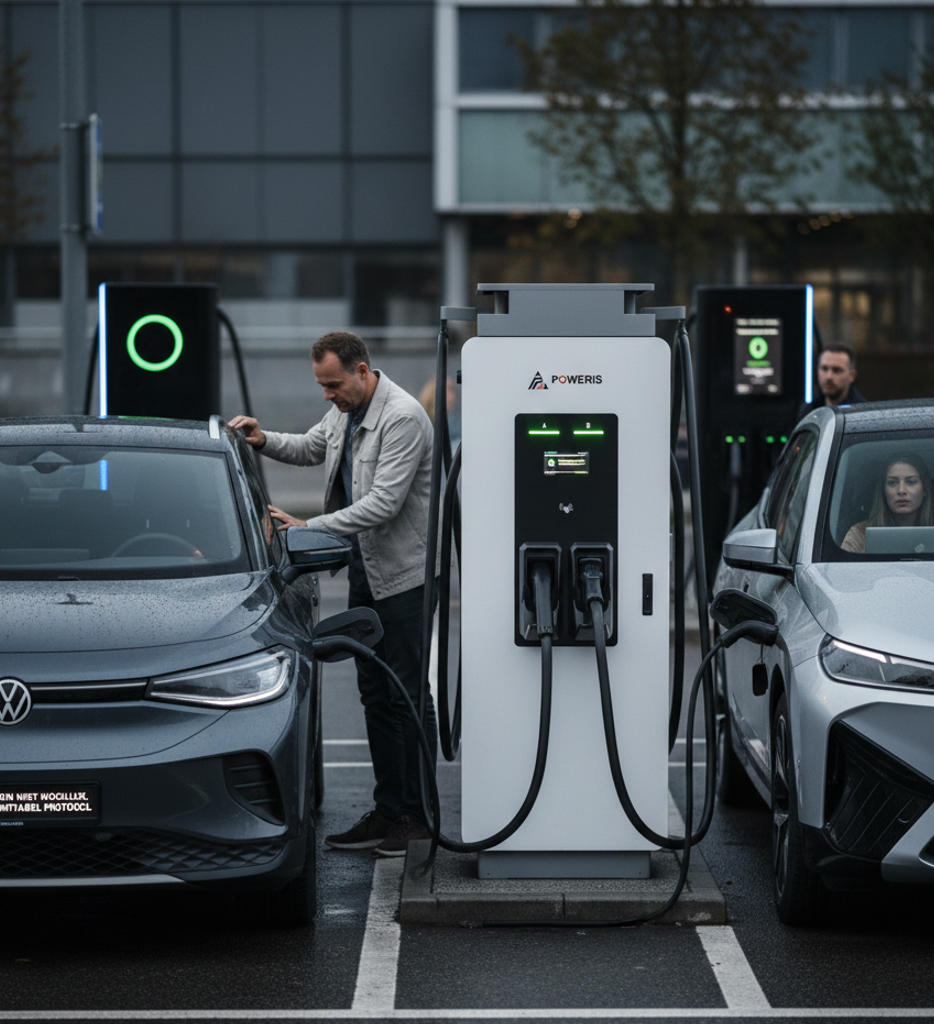
What Are EV Charger Compatibility Issues?
Compatibility issues occur when the charger’s communication protocol (CCS2, CHAdeMO, GB/T, etc.), power output, or firmware does not fully match the vehicle’s requirements. Common client complaint: “My Tesla/Model 3 charges fine, but Volkswagen ID.4 only gets 20kW or fails to handshake”—often due to CCS2 variant mismatch or outdated charger firmware.
How to Identify Compatibility Problems?
On-site quick checks:
- Handshake failure: Vehicle shows “Charging not available” or charger displays “Communication error”.
- Slow charging: Power limited to 10-30kW despite 150kW capability.
- Intermittent dropouts: Charging starts but stops after 5-10 minutes.
Table: Compatibility Issue Detection Checklist
| Issue Type | Identification Signal | Common Client Feedback (Vehicle Example) |
|---|---|---|
| Handshake/Communication Fail | “Not charging” / error code on vehicle | “Tesla OK, but ID.4 won’t connect” |
| Power Limitation | Max 20-50kW instead of rated 150kW+ | “Charging too slow on Porsche Taycan” |
| Intermittent Disconnect | Stops mid-session, restarts after unplug | “BMW iX drops after 10 mins on 50kW station” |
| Cable/Connector Mismatch | Wrong plug type or loose connection | “CHAdeMO car can’t use CCS2 station” |
How to Prevent and Resolve Compatibility Issues?
Follow OCPP 2.0.1, IEC 61851, and EU AFIR standards for interoperability:
- Protocol support: Ensure charger supports CCS2 (Europe standard) + backward compatibility; update firmware regularly.
- Cable & connector: Use certified cables (CCS2 Type 2); avoid adapters unless certified.
- Testing: Simulate mixed fleet charging (Tesla, VW ID, BMW iX, etc.) during commissioning.
- Fleet management: Maintain charger firmware logs; partner with OCPP-certified providers.
Potential Risks of Compatibility Blind Spots
Ignoring these leads to:
- Operational inefficiency: Low utilization, fleet downtime, customer complaints.
- Revenue loss: Reduced charging sessions, lost income from mixed EV fleets.
- Safety concerns: Forced adapters or mismatched power can cause overheating or faults.
FAQ
- Q: Which protocol is standard in Netherlands/EU 2026?
- A: CCS2 (Combined Charging System Type 2) is dominant; CHAdeMO phasing out.
- Q: How to future-proof chargers for new models?
- A: Choose OCPP 2.0.1 compliant chargers with regular OTA firmware updates.
Share your fleet compatibility headaches (which models fail on your stations?)