
EV Charger Deployment Timeline Risks: 9 Delays & Shortcuts
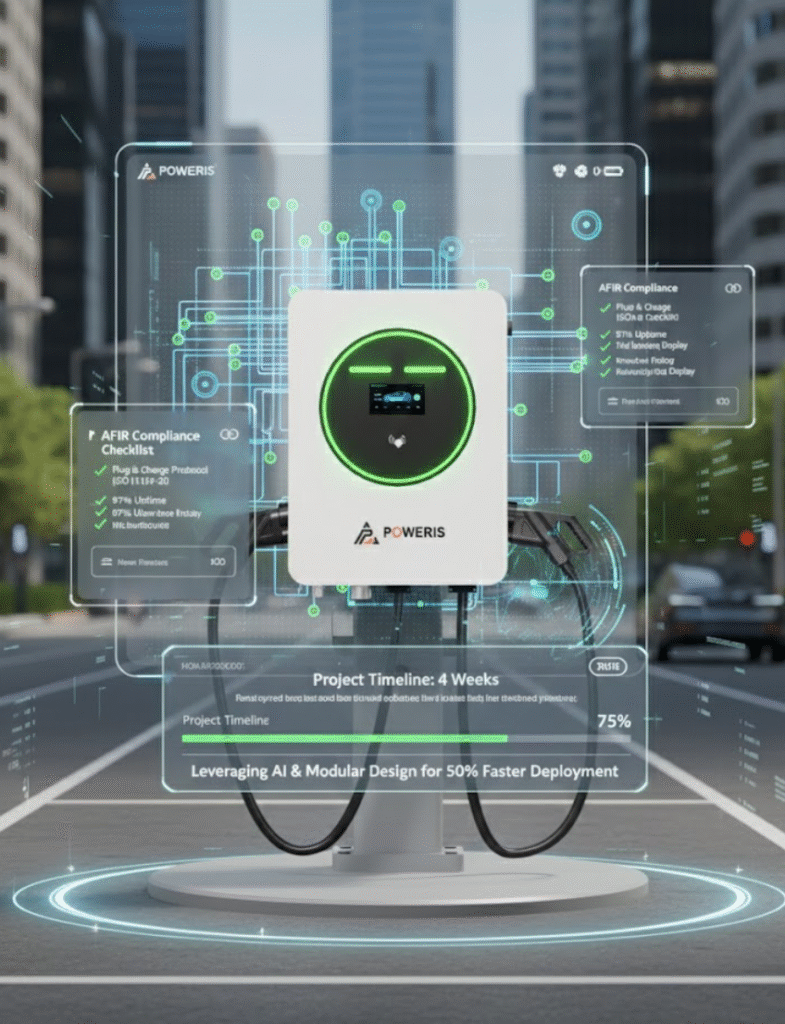
Project timelines slipping—your EV charging station launch delayed by weeks, budgets ballooning from €10k to €50k? In 2026, with EU AFIR regulations mandating Plug & Charge and global market growth to $55.78 billion, 70% of deployment overruns stem from overlooked risks, not supply issues. This guide from real CPO/installer experiences reveals 9 common delays and practical shortcuts to shorten timelines 30-50%.
What Are EV Charger Deployment Timeline Risks?
Deployment timeline risks are unforeseen delays in planning, permitting, installation, and commissioning, amplified by 2026 trends like AI energy management integration and wireless charging trials. Common client complaint: “Expected 4 weeks install, took 3 months—budget doubled due to permits”—often from ignoring regulatory updates like NEVI 97% uptime mandates.
How to Identify Deployment Timeline Delays?
Early warning signs:
- Permit bottlenecks: Local approvals taking >4 weeks.
- Site prep surprises: Unexpected grid upgrades or soil issues.
- Integration hitches: Firmware/protocol mismatches with existing systems.
Table: 9 Common Deployment Timeline Risks (with 2026 Trends)
| Risk # | Delay Cause | Typical Timeline Impact | 2026 Real-Time Factor |
|---|---|---|---|
| 1 | Permitting/regulatory approvals | 4-12 weeks | AFIR Plug & Charge mandates slowing EU |
| 2 | Site survey & prep errors | 2-6 weeks | Soil resistivity tests for wireless |
| 3 | Grid connection delays | 6-16 weeks | High demand from ultra-fast chargers |
| 4 | Supply chain bottlenecks | 3-8 weeks | Solid-state battery integration waits |
| 5 | Installation team shortages | 1-4 weeks | Labor crunch from market growth |
| 6 | Protocol/firmware compatibility | 2-5 weeks | V2G bidirectional setup complexities |
| 7 | Testing/commissioning failures | 1-3 weeks | NEVI 97% uptime verification |
| 8 | Weather/environmental disruptions | 1-4 weeks | Rain delays in Netherlands |
| 9 | Post-install software updates | 1-2 weeks | AI energy management OTA rolls |
How to Shorten Deployment Timelines?
Leverage 2026 trends for acceleration:
- Pre-emptive permitting: Start AFIR-compliant applications 8 weeks early, use consultants for NEVI-like standards.
- AI-optimized planning: Use AI tools for site selection and grid simulation to cut prep by 40%.
- Modular/wireless options: Choose pre-tested modular chargers or wireless pilots to reduce install by 50%.
- Integrated supply chains: Partner with V2G-ready suppliers for faster delivery.
FAQ
- Q: How does AFIR 2026 affect deployment timelines?
- A: Mandates Plug & Charge, adding 2-4 weeks if not pre-planned.
- Q: Can AI shorten EV charger install times?
- A: Yes, AI grid simulation cuts prep by 30-50%, per recent EU projects.
Share your deployment delay stories or timeline shortcuts to get POWERIS support