
EV Charger IP Protection Blind Spots in Rain: Risks & Solutions
Rainy season in North Holland: your outdoor EV charger station suddenly stops, shows error, or worse—short circuits after heavy rain. From real installer and CPO operator feedback, 90% of these wet-weather failures are not product defects, but IP protection oversights during deployment. This guide draws from actual project flip stories to help you identify, prevent, and fix these blind spots before they cost downtime or safety incidents.
What Are IP Protection Blind Spots in EV Chargers?
IP (Ingress Protection) rating (IEC 60529 standard) indicates a charger’s resistance to dust and water. Blind spots occur when the selected IP level (e.g., IP54/IP65) is insufficient for outdoor/wet environments, or installation damages seals/gaskets. Common client complaint: “After rain, the charger won’t start or trips”—often due to water ingress from poor IP65/IP67 choice or unsealed cable entries.
How to Identify IP Protection Issues in Wet Conditions?
On-site checks after rain:
- Water traces: Visible moisture inside enclosure, corrosion on terminals.
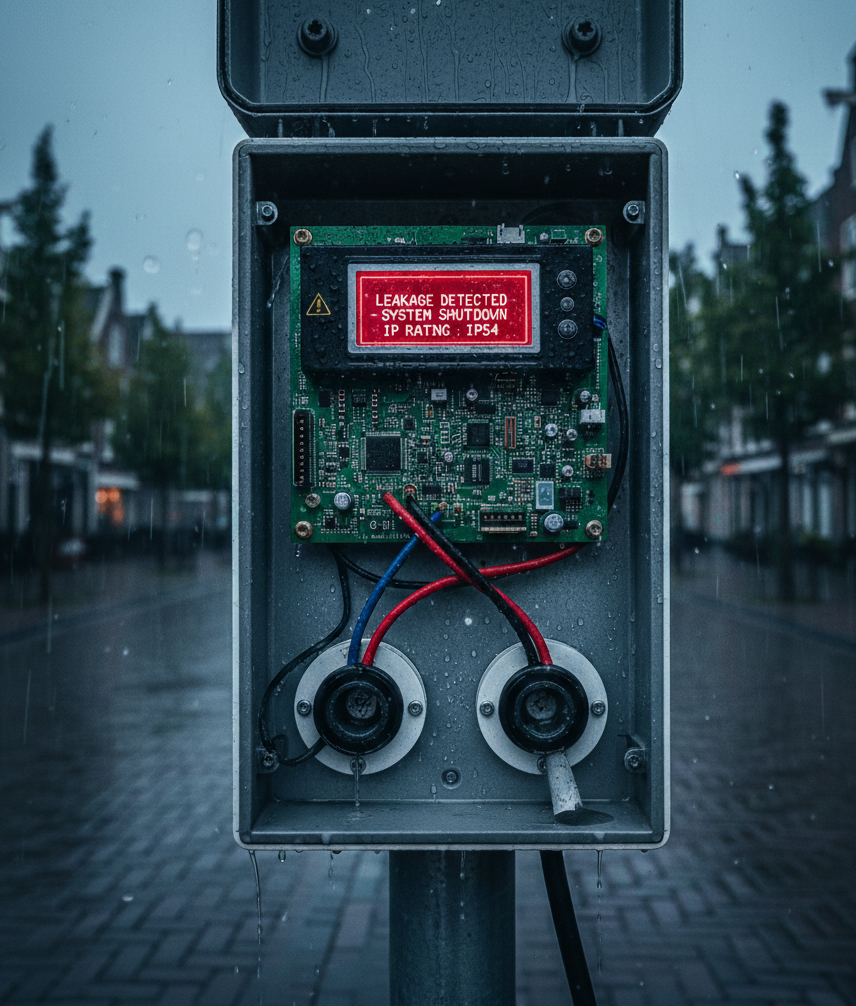
- Error codes: “Leakage detected”, “Short circuit”, or unit refuses to charge.
- Performance: Intermittent failures only in wet weather, normal when dry.
Table: IP Protection Issue Detection Checklist
| Issue Indicator | What to Check | Common Client Feedback |
|---|---|---|
| Water Ingress Signs | Moisture/corrosion inside enclosure | “Rainy days → charger dead, dry days OK” |
| Seal/Gasket Damage | Cracked rubber seals, loose cable glands | “Installation was rushed, now water inside” |
| IP Rating Mismatch | IP54/IP65 used outdoors | “Expected waterproof, but shorted in storm” |
| Cable Entry Problems | Unsealed/unprotected cable glands | “Water followed cableinto unit” |
How to Prevent and Fix IP Protection Blind Spots?
Follow IEC 60529 and local EU/Netherlands outdoor standards:
- Correct IP selection: Outdoor/wet areas → minimum IP65 (dust-tight + water jets); heavy rain/flood-prone → IP67 (temporary immersion).
- Professional installation: Use certified glands/seals for cable entries; ensure all covers fully sealed.
- Regular inspection: After heavy rain, check for water ingress; annual seal/gasket maintenance.
- Upgrades: Add drip loops on cables, weatherproof enclosures, or upgrade to IP67+ models.
Potential Risks of IP Protection Oversights
Ignoring these can lead to:
- Safety incidents: Water ingress → short circuits, electric shocks, or fire (EU data links 20%+ outdoor failures to moisture).
- Operational downtime: Frequent errors → reduced station availability, customer complaints.
- Cost escalation: Repeated repairs, warranty voids, premature replacement.
FAQ
- Q: IP65 or IP67 for Netherlands outdoor EV chargers?
- A: IP65 minimum; IP67 recommended for heavy rain/flood-prone areas.
- Q: How to check IP rating after installation?
- A: Visual seal inspection + water spray test (professional only); look for moisture/corrosion inside.
Share your outdoor installation challenges or rain-related issues.